
One and a half year ago, we released our first AI-generated short film. Six months later we created a 13 minute long short film and were among the first in the world to do so at that scale. Since then, our AI productions have been screened at film festivals across different continents. Now, as we produce our second series for SVT (Swedish public television), we see clear signs of where we are heading: toward the democratization of the film medium.
Resistance Is Nothing New
The Awarehouse Studio consists of four friends with decades of shared experience in traditional film production. We aren’t driven by the technology itself, but by the desire to tell stories. We started with AI because we saw an opportunity. The technology was uncertain, and the boundaries of what was possible were unclear. We saw a path where we could finally tell our own stories fully, without having to compromise due to a lack of resources.
Whenever groundbreaking development alters the craft, the same resistance arises. When sound arrived to film, many filmmakers and critics believed silent cinema was a pure visual language and feared that cinema as an art form would die. When digital film entered the stage, it was said to look cheap, clinical, and flat compared to 35mm film’s grain and softness.
Through decades of technical development, the main constant however, is an artist’s ability to move us through storytelling.
Such resistance often softens when we shift our focus to what possibilites may lay ahead.
New Ways Become Possible
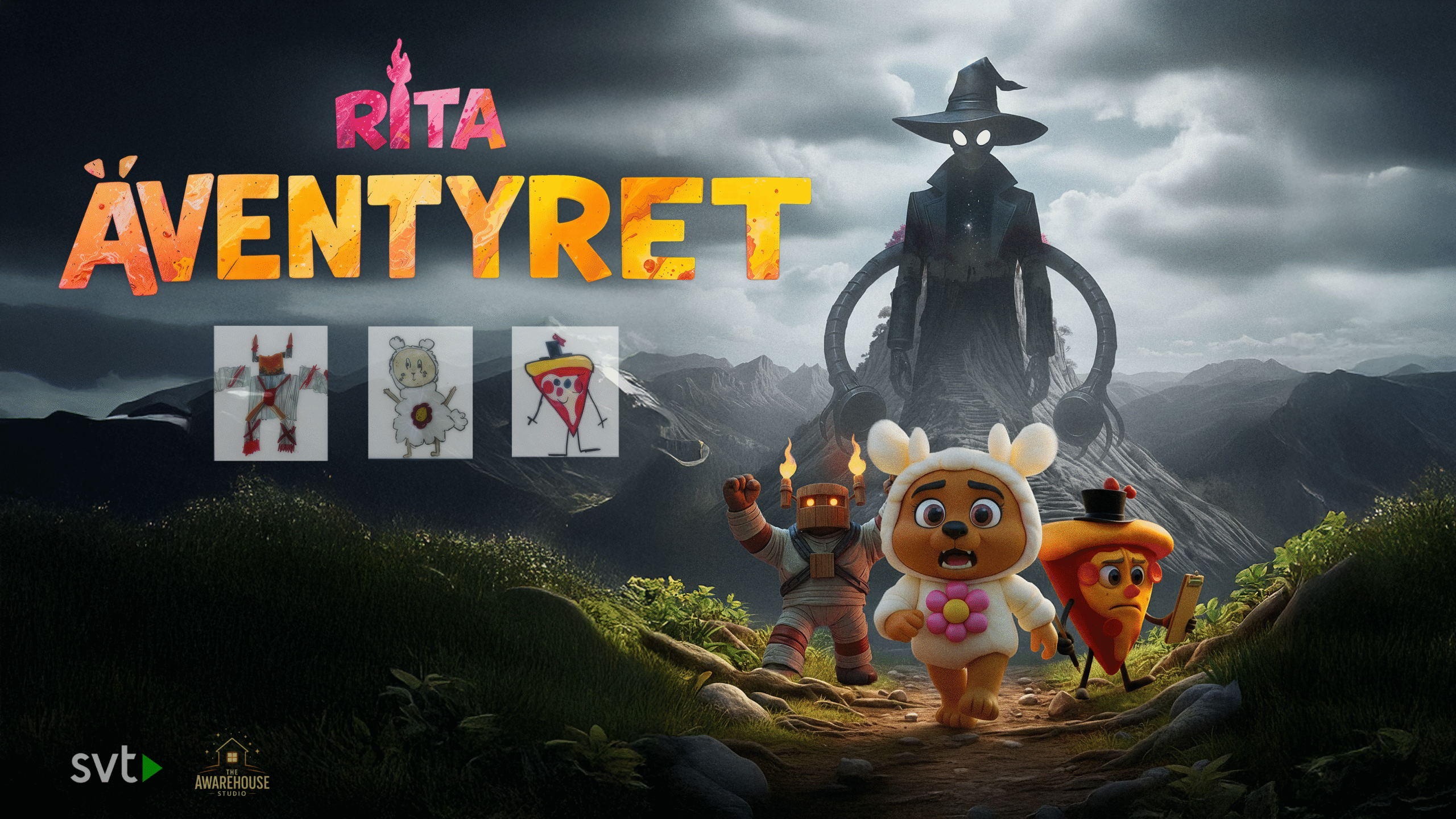
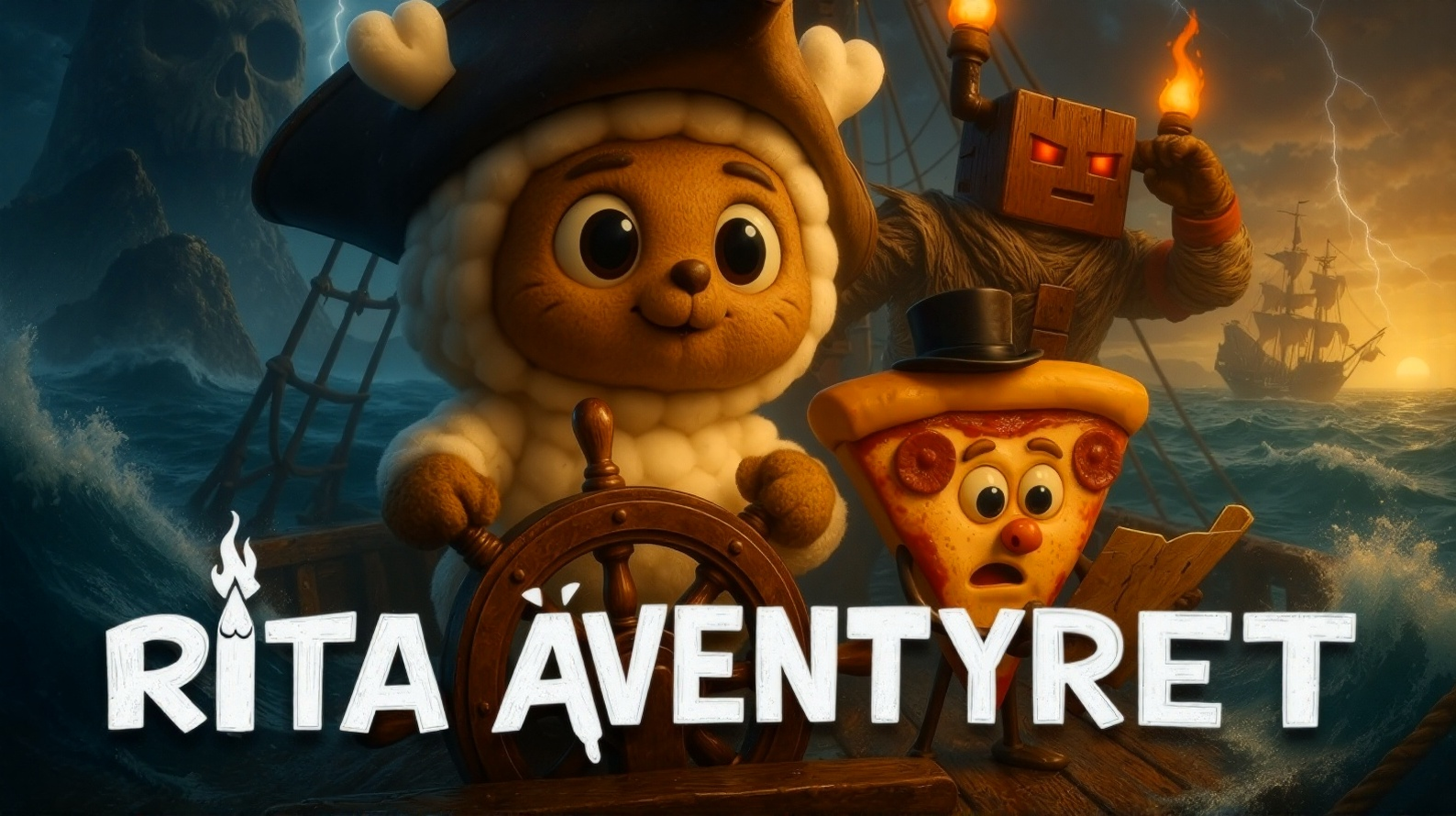
A clear example of these possibilities is our production Rita Äventyret (Draw the Adventure) for SVT. It is an interactive series where children send in drawings via an app, which then come to life in the series the following week.
With traditional animation, that kind of fast turnaround would have been a logistical nightmare, if not impossible. With a new way of working, we could let children see their own characters wake up and move just days after they drew them.
Even watching this series, you can see a jump in technological development between episode 1 and 10. It was created week-to-week in real-time, thus also showcasing the speed at which the medium is currently developing.
The Craft Doesn’t Disappear. It Changes.
Let us be clear about what “AI-generated” means to us. It is a technical term for the tools we use. We use them as a brush to create what we previously lacked resources to create. But the hand holding the brush is 100% human.
Behind every scene stands a team of very much alive directors, editors, and sound designers. We are the ones who select, reject, polish, and build the dramaturgy.
The process is a tennis match. You serve a vision. The AI returns a draft. You judge it, adjust, direct, and serve again. It still requires a human hand and a sense of timing to turn it into cinema rather than just noise.
Working with AI is not an automatic path to a good story and a good film. That requires skill, taste and feeling. When technology makes it easier to produce an image, your eye for composition, light, and storytelling becomes even more important. The difference is that you no longer need a million dollars to test if your idea holds up.
Early Steps Always Look Raw
Development is moving at rocket speed. The complex hurdles we struggled with a year ago have already been replaced by smoother solutions. We see a clear trend: your ability to handle software or write code will become increasingly less relevant. However, your understanding of the film medium will become crucial.
We are moving toward a future where you can control entire productions using natural language. When anyone can create an image, only those with a strong vision can create a story.
And yes, this means a lot will look uneven in the beginning. All new forms of expression do. The first photographs looked flat compared to paintings. Early film felt rough compared to theater stages. But the medium finds its language. The craft matures. What we see now is not the end product; it is the starting point. AI will never be as bad as it is today.
An Invitation
We believe that storytellers have the most to gain from this development. We saw the potential early and jumped on the train, but this is just the beginning. Something big is happening to the film medium.
In the end, the question is no longer what the technology can handle.
The question is: What do you dream of telling?